Southwest: Arizona and Coachella Valley trip planning
Desert Golf After Overseeding: Five Questions for the Course
Do not infer reopening dates or playing restrictions from the destination alone. Ask the specific course about current maintenance and access, then plan a course check only within its stated limits.
Use this in the app: import the session, keep the clubs in Bag DNA, and compare one shot in Course Mode.
Related Golf Notes: Your First Arizona Winter Round: Start with a Carry Baseline · Overseeded Fairways: Keep Carry and Roll in Separate Notes · Cool Starts, Warmer Finishes: Logging a Phoenix November Round
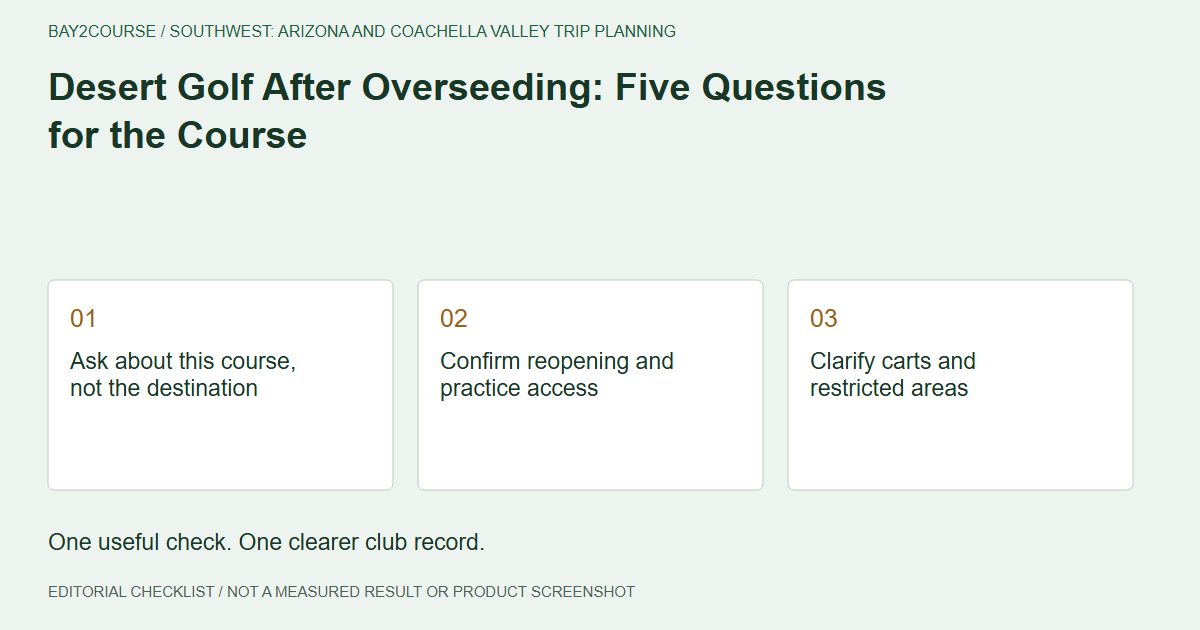
Ask about this course, not the destination
A November trip to Arizona or the Coachella Valley needs course-specific answers. Do not infer reopening dates from another course, last year's itinerary, or the destination's reputation. USGA winter guidance explains that overseeding can involve disruption, but a general explanation is not a local schedule. Before building a practice plan, ask the course how its current maintenance arrangements affect your booking. Record the answer date so an old confirmation does not silently become this week's operating information.
Confirm reopening and practice access
The first question is whether the course is open for your booked round and whether any changes are expected. The second is whether the practice facilities you intend to use are available. Ask those separately: permission to play the course does not automatically answer a question about a range or short-game area. If your travel plan includes a carry check, explain that you want to use the authorized practice facilities, not create an exception to a maintenance restriction.
Clarify carts and restricted areas
The third question concerns the current cart policy. The fourth asks which areas, if any, are restricted and where to find the instructions on arrival. Repeat the answer back if it is ambiguous. Do not turn a general staff comment into a promise that every part of the property is accessible. Keep restrictions in the itinerary where everyone in your group can see them. The purpose of the call is to plan around the course's operation, not negotiate ways around it.
Identify the current update source
The fifth question is where to check for changes before leaving for the course. Save the official contact or notice location and note when the information was supplied. A separate trip sheet can show confirmed and unconfirmed items without exposing a staff member's personal details. In the club card's 50-character note, a fictional pointer such as 'Course check pending; access unconfirmed' is sufficient. The complete booking conversation belongs elsewhere, not crammed into the card.
Have a useful fallback
If outdoor practice is unavailable, use the time to review your existing simulator record, equipment identity, and open coaching questions. An available indoor visit can create a dated reference, but it does not complete the postponed course check. Keep the two tasks distinct. Once permitted access is confirmed, look for an ordinary opportunity to collect the missing observation. You do not need to claim that every desert course follows the same maintenance calendar to arrive with a sensible, flexible plan.
Common questions
Can last year's reopening date guide this year's booking?
It may remind you to ask about maintenance, but it is not confirmation. Verify the current arrangements directly with the course before relying on them.
Does an indoor session replace the outdoor check?
No. It can help document an indoor reference while access is limited. Keep the outdoor question pending until a suitable, permitted observation is available.
Sources and further reading
Primary references behind this guide. Local course instructions and current weather take priority over seasonal averages.
Written by Bay2Course, the maker of the app. This is practical record-keeping guidance, not independent equipment testing or a claim of professional coaching credentials. How we prepare and correct guides.
Explore: for venues · how it works