Southwest: Arizona winter arrivals
Your First Arizona Winter Round: Start with a Carry Baseline
Bring dated simulator carry records, then collect separate course observations after arrival. A change of location is a reason to revisit a card, not proof that every club needs the same adjustment.
Use this in the app: import the session, keep the clubs in Bag DNA, and compare one shot in Course Mode.
Related Golf Notes: Create a Fall Club Card Before Your Next Simulator Session · Carry vs. Total: Which Number Belongs on Your Club Card? · Normalized Simulator Distance Is Not Tomorrow's Outdoor Yardage
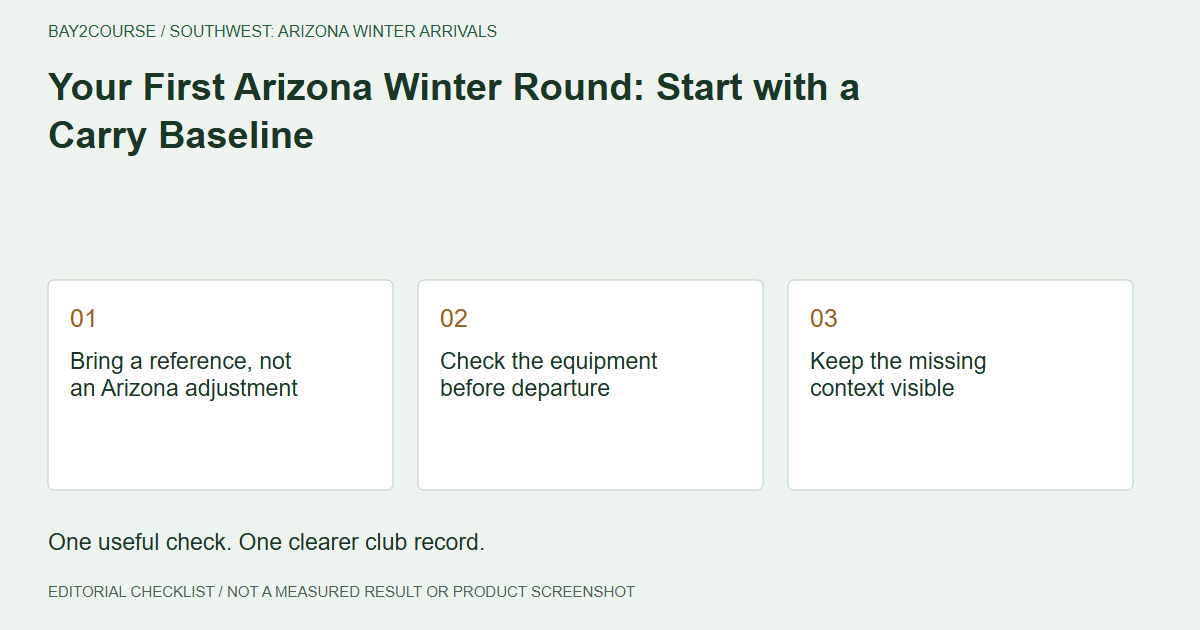
Bring a reference, not an Arizona adjustment
Your first winter round in Arizona is a good time to revisit your distances, but arriving in a new state does not establish new numbers. Bring the carry records you already have and identify where they came from. A simulator session can tell you what was reported under that session's setup. It cannot settle what your next shot will do outdoors. Treat the trip as an opportunity to add useful observations rather than applying one adjustment to every club.
Check the equipment before departure
Lay out the clubs you are actually taking. Compare their identities with your records, including any recently replaced club or changed setup. Confirm the ball you used for the baseline and the units attached to the distances. Keep the original session date available. If the travel bag contains a borrowed wedge, leave its reference open instead of giving it the number from your usual wedge. Matching a club label is not enough to establish that the equipment is the same.
Keep the missing context visible
Look back at the simulator session before you lose easy access to the venue. Ask whether the displayed distance was carry and whether reporting assumptions were adjusted. If the answer is unavailable, record that uncertainty. A concise Bay2Course note such as 'Home session; settings unknown' fits within 50 characters. Keep longer equipment details in a separate worksheet. Do not compress several uncertainties into a short note that makes the record sound more complete than it really is.
Use the first round selectively
Check the current local forecast and course instructions before leaving for the round. Arizona is the destination, not a description of the day's conditions. Choose one club question to observe during ordinary play. Record a landing only when you can identify it, and distinguish your estimate from a measured distance. An uphill view, an obscured landing, or a final resting position alone should leave the carry question unresolved. Follow practice-area restrictions rather than creating your own test opportunity.
Review before you revise
After the round, compare the new observation with the home record. Ask whether the club, ball, shot intention, and available distance evidence are comparable. A fictional note such as 'AZ check; landing unclear' is more useful than a confident new carry based on incomplete information. Preserve the original context outside the note before editing anything. Create missing entries, revisit disputed ones, and share the specific question with a coach. The first Arizona round does not need to validate the whole bag.
Common questions
Should I change every distance before my first round?
No. Keep your existing reference and its limitations visible. Use current conditions and appropriate on-course judgment for play, then gather evidence before revising recorded carry.
What if I cannot remember the simulator settings?
Mark them unknown and ask the original venue when practical. You can still retain the session as a record; simply avoid presenting it as directly comparable outdoor evidence.
Sources and further reading
Primary references behind this guide. Local course instructions and current weather take priority over seasonal averages.
Written by Bay2Course, the maker of the app. This is practical record-keeping guidance, not independent equipment testing or a claim of professional coaching credentials. How we prepare and correct guides.
Explore: how it works · trust