Midwest and Northeast
Planning an Afternoon Check After a Possible Frost Delay
An afternoon slot may provide a different observation opportunity, but do not assume the course has opened. Confirm access and record the actual time and conditions.
Use this in the app: import the session, keep the clubs in Bag DNA, and compare one shot in Course Mode.
Related Golf Notes: A Midwest First-Freeze Plan for Checking Three Clubs · When a Frost Delay Changes Your Midwest Practice Plan · Northern Indiana Freeze History: What It Can and Cannot Tell Golfers
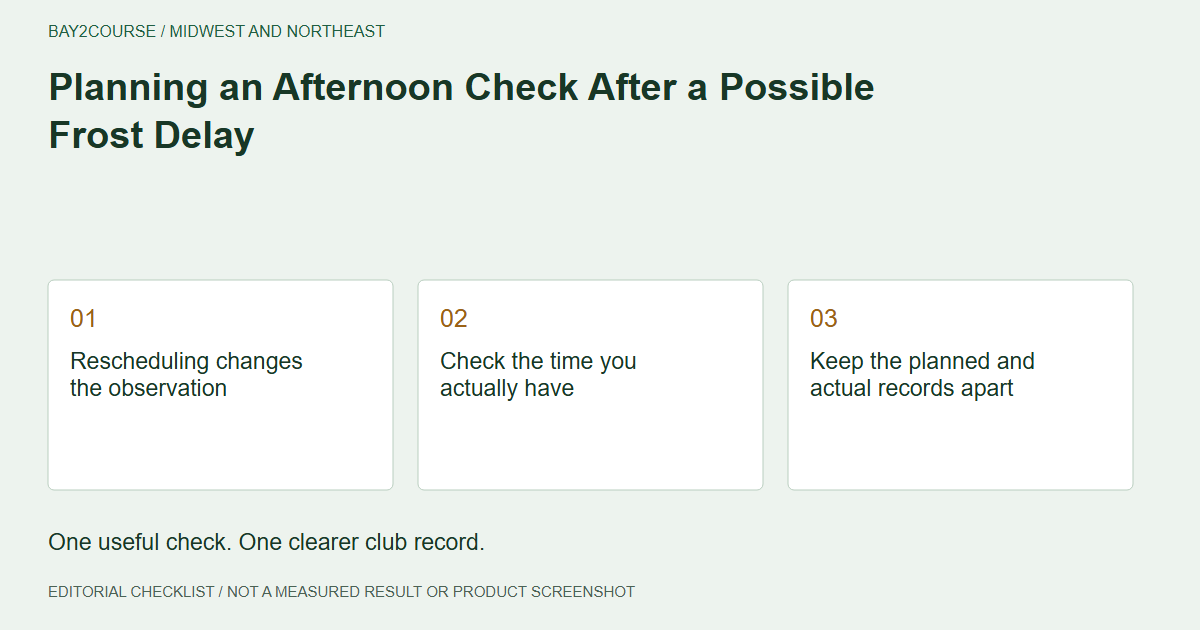
Rescheduling changes the observation
Moving an autumn club check from morning to afternoon is not simply moving the same experiment a few hours forward. The actual outing has a new time and potentially different circumstances. Record what happens during that outing rather than carrying the morning plan into the evidence as if it occurred.
The USGA identifies frost delays as part of fall golf. That provides seasonal background, not a prediction that a Midwest or Northeast course will reopen at a particular hour. Confirm the revised arrangements with the operator before making the trip or entering a practice area.
Check the time you actually have
Once access is confirmed, reassess your available window. Account for the revised start, your other commitments, and whether you can complete the intended activity without rushing. A shorter window calls for a smaller question, not a compressed attempt to check every club.
Choose one priority before play. Perhaps the most useful task is observing an iron whose last landing was obscured. Leave less urgent questions for another occasion rather than allowing the delayed start to turn the round into a hurried checklist.
Keep the planned and actual records apart
Use your personal calendar or worksheet to retain the original plan if it helps explain the change. The club-card evidence should describe the actual observation. A morning appointment that never happened is not a morning course check.
Within the 50-character note limit, 'Afternoon check; landing visible' can summarize a completed observation, while 'Rescheduled; no suitable check' preserves an unresolved task. Neither note needs to contain the entire sequence of calls and booking changes.
Judge whether the opportunity is usable
An open course does not guarantee a useful observation for your chosen club. You may not use it, may not see the landing, or may lack a clear reference. Do not force a shot or add extra balls during ordinary play just because this was your rescheduled chance.
If the evidence is partial, say which part you observed. A final position and a visible first landing are different information. Keep any longer explanation in your own record, and resist the temptation to present a precise carry figure merely to close the task.
Review the afternoon on its own terms
Afterward, ask what this outing added to the card. Do not compare it with an imagined morning result or claim that the delay itself caused a distance change. You can only review the evidence that was actually gathered.
If the question remains open, choose a new local decision point and check conditions again before the next attempt. The practical win is a record you can explain to your coach or revisit yourself, with the difference between planned work and completed observation unmistakable.
A worked example
DEMO - fictional rescheduled observation record.
| Event | Record type | Example |
|---|---|---|
| Morning booking | Plan | Check postponed |
| Afternoon outing | Actual event | Club used during normal play |
| Card note | Observation | Afternoon check; landing visible |
Common questions
Can I assume the course will open once the afternoon arrives?
No. Time passing is not an operator instruction. Confirm current access and any restrictions directly through the course's available notices or staff before proceeding with your plan.
Should I keep the canceled morning plan on the card?
Keep scheduling history separately if useful. The short card note should prioritize whether an actual check occurred and any important qualification, rather than making a planned session look like completed evidence.
Sources and further reading
Primary references behind this guide. Local course instructions and current weather take priority over seasonal averages.
Written by Bay2Course, the maker of the app. This is practical record-keeping guidance, not independent equipment testing or a claim of professional coaching credentials. How we prepare and correct guides.
Explore: how it works · trust