National
Your First Winter Coaching Lesson: Share Context Before Advice
Bring your recent carry records, previous coach notes, and the questions you cannot resolve alone. The card supports a conversation; it does not diagnose a swing or guarantee a coaching outcome.
Use this in the app: import the session, keep the clubs in Bag DNA, and compare one shot in Course Mode.
Related Golf Notes: Create a Fall Club Card Before Your Next Simulator Session · Carry vs. Total: Which Number Belongs on Your Club Card? · Normalized Simulator Distance Is Not Tomorrow's Outdoor Yardage
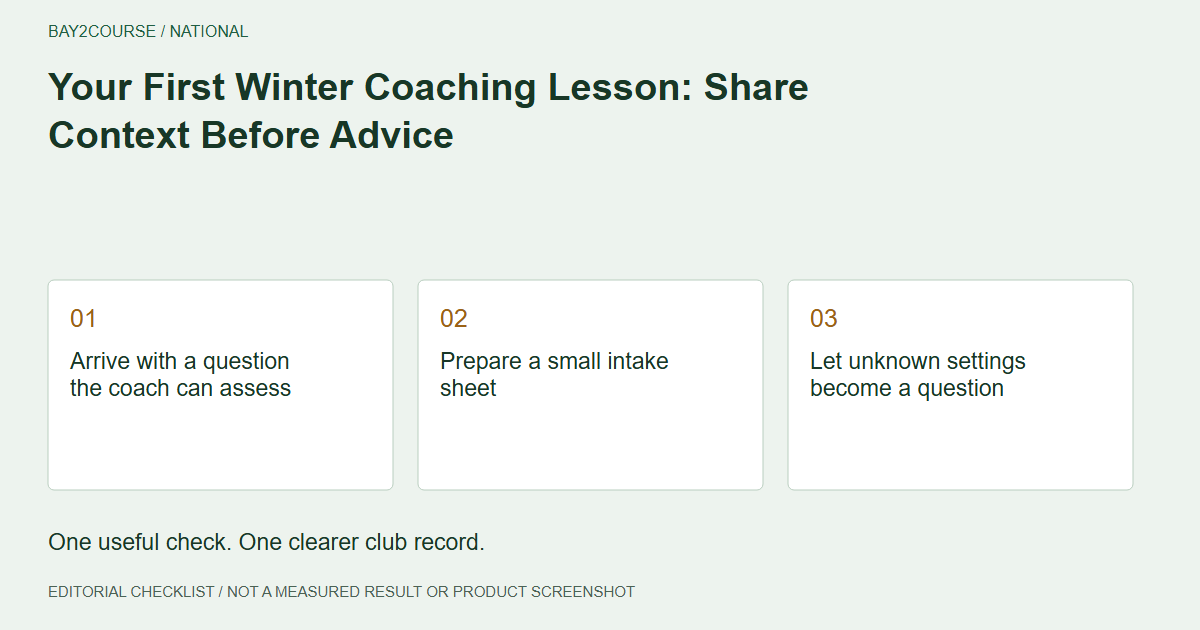
Arrive with a question the coach can assess
For your first winter coaching lesson, bring context before asking for a verdict. A new coach has not necessarily seen the equipment, sessions, or earlier advice behind your carry record. Choose a focused concern, such as two clubs whose recorded distances appear to overlap. Describe what you know and what you could not confirm. That gives the lesson a concrete starting point without asking a club card to diagnose your swing or explain your entire game.
Prepare a small intake sheet
Use a separate page for equipment identity, recent session dates, the ball used, and the sources of the numbers. Add the previous coaching advice you want to discuss, distinguishing a remembered paraphrase from exact wording. Include your current goal in ordinary language. For example, wanting to understand an unclear gap is more specific than asking the coach to fix everything. You do not need an impressive data history; a small set of understandable records is easier to discuss.
Let unknown settings become a question
If you cannot establish how a simulator result was reported, say so. That missing context is not evidence of a swing fault. Ask whether a better-documented session would be useful before interpreting the old numbers. Keep a short card note such as 'First lesson; carry context unclear' within the 50-character limit, and retain the detailed session questions on the intake sheet. The note should help you remember the issue, not imply that the coach has already reached a conclusion.
Use three prompts during the lesson
Ask which club question deserves attention first, what evidence is missing, and what you should observe at the next permitted opportunity. Listen for distinctions between a technical instruction and a recording task. If the coach suggests a specific observation, repeat it back in your own words to confirm understanding. Avoid leaving with a vague instruction to test everything. A single agreed question is easier to follow up on than an ambitious plan you cannot describe or document consistently.
Share deliberately and review together
Show the intended coach the card and supporting sheet, and check that the references mean what you think they mean. Do not assume automatic access, messaging, or synchronization between professionals. After the lesson, preserve the coach's wording separately if it will not fit in the card note. Record the next question concisely and return with the observations you actually obtain. Bay2Course supports continuity between sessions; it does not guarantee a coaching result or replace the coach's interpretation.
Common questions
Should I bring every simulator screenshot I have?
Bring the records relevant to the question and preserve their context. A large unexplained collection can be less useful than a few clearly identified sessions.
What if my previous coach's advice is difficult to explain?
Label your recollection as a paraphrase and ask for clarification where possible. Do not turn uncertain remembered wording into a firm instruction attributed to that coach.
Sources and further reading
Primary references behind this guide. Local course instructions and current weather take priority over seasonal averages.
Written by Bay2Course, the maker of the app. This is practical record-keeping guidance, not independent equipment testing or a claim of professional coaching credentials. How we prepare and correct guides.
Explore: for coaches · how it works · trust