Northeast: central New York and northeast Pennsylvania
Northeast Frost Advisories Are Not Course-Opening Notices
A weather advisory is not permission to play. Check the course directly, and keep your card's outdoor evidence pending when access or observations are unavailable.
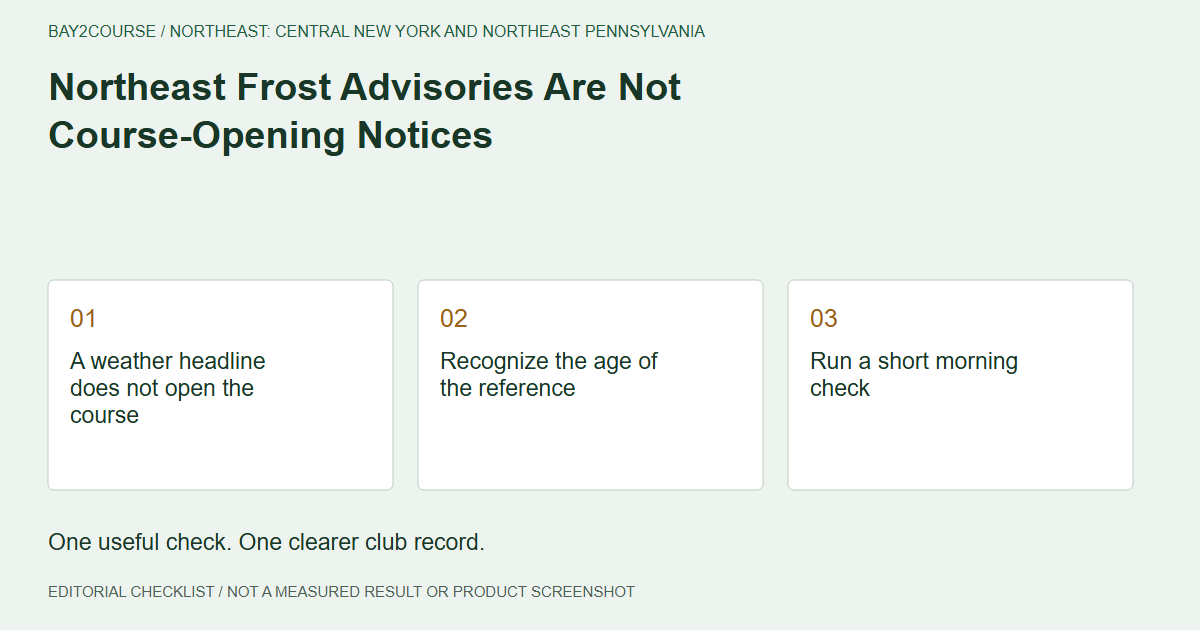
A weather headline does not open the course
A frost advisory and a course-opening notice serve different purposes. In central New York and northeast Pennsylvania, check both the weather information relevant to your destination and the operator's instructions. Neither a booked tee time nor the absence of a headline settles whether play is available.
Keep the decisions separate in your morning routine. Weather information helps you understand the situation. The course tells you what access is permitted. Your club card records what you actually observed after play occurred, not what you hoped to observe when you booked.
Recognize the age of the reference
The NWS Binghamton Frost/Freeze Program page explains a vegetation-focused warning program and describes a 2023 experiment. It is useful background for understanding the purpose of those headlines, but its historical cutoff dates should not be presented as current 2026 operating policy.
That distinction matters when an old page appears in search results. A date mentioned in a weather-program explanation is not a golf-course closure schedule. Look for current local information rather than assuming a historical program description answers today's access question.
Run a short morning check
Start with the destination forecast, then review the course's current notice or contact the operator if its instructions are unclear. Confirm whether your tee time has changed and whether any practice area you intended to use is available. Do not assume one opening decision applies everywhere.
Before you leave, choose one club-card question to carry into the round. This makes a shortened outing useful without requiring you to complete an entire testing routine. Keep any new access information in your personal schedule, not disguised as evidence of a golf shot.
Record a delay without altering the baseline
If the round is delayed or canceled, the simulator entry has not suddenly become more or less accurate. Leave the evidence distinction intact. A concise note such as 'Course check deferred; no observation' fits within 50 characters and explains why nothing new was established.
Avoid replacing an outdoor check with an indoor number merely to make the card look finished. You can use the time to confirm a source label or review a coach note, but that is a different task. Name it accurately in your own review.
Make the next attempt specific
Choose a later decision point to revisit access rather than repeatedly assuming the delay has ended. When a suitable opportunity exists, record the actual observation and its date in the appropriate record. A postponed morning plan should not be mistaken for an afternoon result.
For a useful handoff, share the existing card with the unresolved question still visible. A coach or playing partner should be able to tell that the course check was deferred. That simple distinction prevents a scheduling interruption from becoming misleading distance evidence.
A worked example
DEMO - fictional morning decision checklist.
| Question | Where to check | Result to preserve |
|---|---|---|
| What is the local forecast? | Current weather information | Planning context |
| Is play permitted? | Course operator | Access decision |
| Was a shot observed? | Actual round | Evidence or deferred check |
Common questions
Does no frost advisory mean the course is ready?
Do not use the absence of a weather headline as an opening notice. Check the operator's current instructions. Weather programs and golf access are separate sources of information with different purposes.
What can I accomplish while the check is postponed?
Clarify a simulator metric, locate the original report, or review the relevant coach question. Those tasks can improve the card's context, but they should not be recorded as completed outdoor observations.
Sources and further reading
Primary references behind this guide. Local course instructions and current weather take priority over seasonal averages.
Written by Bay2Course, the maker of the app. This is practical record-keeping guidance, not independent equipment testing or a claim of professional coaching credentials. How we prepare and correct guides.
Explore: trust · how it works